Friday, February 15, 2013

Germana pentru incepatori. Lectia 6. Ein bischen Grammatik

Lectia de azi curpinde cateva informatii gramaticale:

1. Genul substantivelor, articolul hotarat: DER, DIE, DAS
2. Pronumele personale
3. Conjugarea verbelor HABEN si SEIN la prezent + exemple


Urmand linkul veti ajunge pe o alta pagina unde veti putea citi informatii detaliate despre genul substantivelor si cateva reguli de identificare a acestora.

Un program util in exersarea cuvintelor noi este Quizlet. Aici va puteti face singuri un deck care sa contina cuvintele de vocabular pe care doriti sa le exersati. Pentru inceput puteti sa incercati deck-urile gata create, cum ar fi acesta. Exista si un exercitiu care va indeamna sa scrieti cuvintele dupa dictare (totusi pronuntia nu este intotdeauna corecta, vorbeste un robot, nu un nativ).

Un alt program interesant este Learning Apps. Exercitiul gen puzzle din film este acesta. Puteti cauta in baza de date multe alte exercitii sau sa le creati voi singuri. Pentru a fi siguri de corectitudinea exercitiilor, va recomand sa cautati printre cele create de Nadja Blust (profesoara de limba germana).
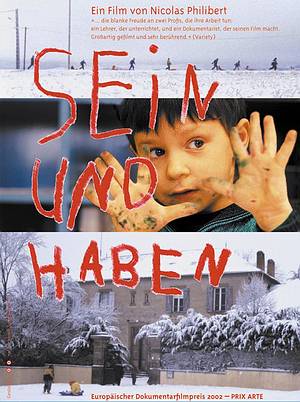
Quelle: www.seinundhaben.net

Mai jos vom exersa verbele haben si sein. Va rog sa completati cu forma corecta. Solutia corecta o voi posta dupa ce apare primul comentariu la acesta lectie.

1. Das ________ Anna. (Aceasta este Ana)
2.Sie _______ Studentin. (Ea este studenta)
3. Sie _______ aus Polen. (Ea este/provine din Polonia)
4. Ich ________ glücklich. (Eu sunt fericit)
5. Warum __________ du traurig? (De ce esti trist?)
6. Wir _________ aus Thailand. (Noi suntem din Tailanda)
7. Ihr ________ zu spät! (Voi ati intarziat /ati venit prea tarziu)
8. Er _________ Koch. (El este bucatar)
9. Sie __________ Tänzerin. (Ea este dansatoare)
10. Woher __________ Sie? (De unde este ea)
11. Das _________ interessant. (Asta este interesant)
12. Wer _______ das? (Cine este acesta)
13. New York ________ groß. (New York este mare)
14. Marcos und Alba ________ aus Spanien. (Marcos si Alba sunt din Spania)
15. Du __________ schön! (Tu esti frumos/frumoasa)

Lösungen: 1.ist 2. ist 3. ist 4. bin 5. bist 6. sind 7. seid 8. ist. 9. ist 10. sind 11. ist 12. ist 13. ist 14. sind 15. bist
1. Ich _______ ein Kind. (Eu sunt un copil)
2. Du ________ ein Auto. (Tu ai o masina)
3. Wir ________ neue Freunde. (Noi suntem prieteni noi)
4. Er ________ einen Job. (El are un job)
5. Ich _________ einen Sohn. (Eu am un fiu)
6. Meine Schwester _________ ein Haus.(Sora mea are o casa)
7. Ihr ________ Zeit. (Voi aveti timp)
8. Wer ________ mein Buch? (Cine are cartea mea?)
9. Herr Müller __________ Glück. (Domnul Müller are noroc)
10. Ich _________ kein Geld. (Eu nu am bani)
11. ________ du Lust? (Ai chef?)
12. Sie ___________ einen Mann. (Ea are un barbat)
13. ____________ Sie Zeit? (Are ea timp?)
14. Paul und Claudia ___________ einen Hund. (Paul si Claudia au un catel)
15. Du ________ schöne Augen! (Tu ai ochi frumosi)

Lösungen: 1. habe 2. hast 3. haben 4. hat 5. habe 6. hat 7. habt 8. hat 9. haben 10. habe 11. Hast 12. hat 13. Haben 14. haben 15. hast

Friday, December 14, 2012

Germana pentru incepatori - Lectia 4. Cat este ceasul?

*This lesson is in Romanian language. But all the exercises are in German. So feel free to click on the Links and exercise. We are learning today how to tell the time.

Ca sa nu va plictisiti in Weekend m-am gandit sa trecem mai departe si sa invatam cu se spune cat este ora. Va rog sa urmariti filmuletul si apoi sa va puneti pe treaba.
S-ar putea in prealabil sa fie nevoie sa repetati numerele de la 1 la 59 :) Mult spor!


Voi posta si aici linkul despre care am vorbit in film. Wie spät ist es?

Ca exercitiu de ascultare, va propun un cantec: Um sieben fährt mein Bus (la ora 7 pleaca autobuzul meu). Ascultati cu atentie si notati orele specificate in text. Nu este un exercitiu usor, dar cu putin antrenament veti reusi sa identificati 12. Nu trebuie sa intelegeti textul, doar fiti atenti la ore!

Mai jos postez si textul (pentru o traducere grosso-modo puteti folosi Google Translate).

Um 7 fährt mein Bus (Text+Musik: Maik Göpel)

Der Wecker klingelt kurz vor 6,
ich dreh mich noch mal rum.
Nur noch 5 Minütchen,
doch die sind ganz schnell um.

Mutti ruft schon wieder, 
weil ich endlich aufstehen muss.
Waschen, Frühstück, Zähne putzen, 
denn um 7 fährt mein Bus.

Um 6 klingelt der Wecker, um 7 fährt mein Bus.

Halb 8 geht die Schule los,
erst Mathe bei Frau Krause,
danach haben wir  Kunst,
um 9 ist große Pause.

Sachkunde und Deutsch,
dann Exkursion in die Natur.
Um 1 essen wir Mittag;
Mittags um 1 ist 13 Uhr.

Um 6 klingelt der Wecker, um 7 fährt mein Bus.
Um 9 ist große Pause, 13 Uhr Schulschluss.


Important! Ascultati cat mai mult posibil emisiuni, cantece, radio in limba germana. Asa va veti familiariza cu sunetele si pronuntia lor. In curand veti reusi sa auziti cuvintele invatate deja. 

Thursday, December 13, 2012

Germana pentru incepatori - Lectia 3. Numerele. Familia

*This lesson is in Romanian language. But all the exercises are in German. So feel free to click on the Links and exercise. We are learning the numbers and the members of a family.

In lectia de azi vom invata sa numaram si sa ne prezentam membrii familiei.


Am gasit o serie de exercitii interesante care va vor ajuta sa memorati mai usor cuvintele noi.

Pentru a pronunta corect numerele de la 1 la 100 va rugam sa accesati urmatorul link.

Exercitiul 1: Scrieti dupa dictare.

Am gasit aici Die Zahlen von 1 bis 100  in format pdf.

Si acum sa incercam un alt exercitiu. Numerele sunt date in forma lor scrisa si in tabelul alaturat trebuie sa le identificati. Exercitiul 2

Mai tineti minte care sunt membrii unei familii? Putem exersa in Exercitiul 3. (Atentie! Apar in acest exercitiu si cuvinte noi. Va rog sa folositi un dictionar pentru traducerea acestora. Va recomand dictionarul online dict.cc).

Ultimul exercitiu propus de noi pentru azi este un dialog. Acultati dialogul si incercati sa puneti propozitiile in ordinea lor corecta. Exercitiul 4

In final as dori sa apelez la voi pentru feedback. Va plac aceste lectii? Va sunt de ajutor? Exercitiile alaturate vi se par adecvate? Ce sugestii de imbunatatire aveti? 
Parerea voastra este foarte importanta. Aceste lectii sunt gratuite, desi ele necesita destul de mult timp pentru elaborare. Vrem sa le facem cat mai informative si utile. Iar voi ne puteti ajuta! Multumim.

Monday, December 3, 2012

Germana pentru incepatori. Lectia 1

Bine v-am regasit stimati vorbitori de limba romana.

A trecut ceva timp de cand nu am mai creat filmulete pentru voi. Dar am revenit, printre altele si datorita feedback-ului vostru pozitiv, cu o noua abordare. Vreau sa va prezint cat de usor poate fi sa inveti limba germana daca o abordezi jucaus, la fel ca si copiii.


Si acum va propun  sa faceti un scurt exercitiu: Gasiti in tabelul de mai jos cuvintele invatate astazi.

Wednesday, February 1, 2012

Anki - the intelligent flashcards

Anki is a program which makes remembering things easy. Because it is a lot more efficient than traditional study methods, you can either greatly decrease your time spent studying, or greatly increase the amount you learn.
Anyone who needs to remember things in their daily life can benefit from Anki. Since it is content-agnostic and supports images, audio, videos and scientific markup, the possibilities are endless. For example:
  • learning a language
  • studying for medical and law exams
  • memorizing people's names and faces
  • brushing up on geography
  • mastering long poems
  • even practicing guitar chords!
This is how Anki´s developer describes it´s program on http://ankisrs.net/
Studies have shown that 48 hours after a study session, we have generally forgotten 75% of the material. When undertaking something that requires a lot of memorization, such as studying a new language, forgetting 75% of the material you learn can be very demotivating. So I have decided to try it out myself. And it works :)
After testing some existing decks I´ve realized it would be much effective if I use my own cards, to remember for example, the vocabulary from a given lesson. Indeed, now I can remember much more easier the new words. One of my tricks are to introduce together with the word expressions and examples. Here is a model:


What do you think? And of course, I try to make so that the explanation is also in German, to learn the language as naturally as possible for a non-native. 

One of my friends, Helen, suggested me to make a deck with the words requested at official tests, as for example a list of words for "Start Deutsch 1" for the level A1. This means a lot of work, there are more then 500 words, and I am already over that level. But I think this could help a lot for someone at the beginning. Of course, I would make the cards much more easier.

For example:

kommen < kommt, kam, ist gekommen >
Intr.Verb
_______ mal her!
Woher _________ das Brot?
Er _______ aus Italien.
Wir _______ spät nach Hause.

and on the other side would be the answers:

Komm mal her!
Woher kommt das Brot?
Er kommt aus Italien.
Wir kommen spät nach Hause.
 
So I said it is better to ask first, is there anybody who would be interested to have such a deck? 
Please leave your comments below or on Facebook.
Also if you have any other suggestions or observations share them.

Download Anki today or use it online, as it better suits you. Just give it a try. For me, it works great.

Sunday, January 29, 2012

Rätsel - lernen und üben

Heute nur ein kurzes eintrag für Richard. Es geht um Wörter mit Rätsel lernen und üben. Ich mag Rätsels lösen, so habe ich das auch auf Deutsch probiert.

das Rätsel (riddle) = eine spielerische, manchmal schwierige Denkaufgabe, bei der jmd. eine Lösung finden oder erraten muss
ein Rätsel lösen (to solve a riddle) = das Rätsel fertig machen
jemandem ein Rätsel aufgeben = unverständlich sein
in Rätseln sprechen (to speak in riddles) = sich so unklar ausdrücken, dass niemand weiß, wovon man spricht -  Du sprichst in Rätseln!
vor einem Rätsel stehen = etwas nicht begreifen können, sich etwas nicht erklären können - Wie konnte das geschehen? Wir stehen vor einem Rätsel!
Quelle: http://www.grundschule-kirtorf.de   

Hier finden Sie ein paar Links:

1) Kreuzworträtsel und viele andere Rätseltypen für alle, die Deutsch als Fremdsprache lernen oder unterrichten. Unterhaltsames, motivierendes Zusatzmaterial als Wortschatztraining für die Niveaustufen A1-C2 und für alle, die deutsche Wörter lernen und üben möchten.


3) kleinen Seite mit Logikrätseln http://www.daf-raetsel.de/

4) Hier lassen sich kostenlos Rätsel (nicht nur für Kinder) mit Lösung abrufen und auch nach eigenen Wünschen erstellen. Es steht ein Wortschatz von über 1400 Wörtern zur Verfügung, der sich an Grundschüler orientiert. http://www.raetsel-fuer-kinder.de/

5) Unsere Sprachspiele bieten Ihnen unterhaltsame Spielereien zur deutschen Sprache. http://www.duden.de/sprachspiele

Viel Spaß!

Wednesday, January 25, 2012

350 Geburtstag Matthäus Pöppelmann

Another stamp for today:
Well, excuse my ignorance but I don´t really know who Matthäus Pöppelmann was, I never heard of him. So I did a little research.

"Matthäus Daniel Pöppelmann war ein deutscher Baumeister des Barock und Rokoko (u.a. Dresdner Zwinger). Er wurde am 3. Mai 1662 in Herford geboren und verstarb mit 73 Jahren am 17. Januar 1736 in Dresden. Sein Geburtstag jährt sich in diesem Jahr zum 350. Mal.  Als sein Hauptwerk gilt der Zwinger in Dresden "  

Michael Schultz Photography

The Zwinger Palace in the heart of Saxony's state capital is one of the most famous Baroque buildings in Germany and next to the Frauenkirche probably the most famous monument in the city of Dresden. It is home to world-class museums and is a stage for musical and theatrical events. Visit their homepage to learn more about this beautiful building, its gardens and history.
TripAdvisor


Title350 Geburtstag Matthäus Pöppelmann
Date of Issue: January 2, 2012
Source  https://philatelie.deutschepost.de/Neuheiten/Briefmarken-Neuausgaben/350-Geburtstag-Matthaeus-Poeppelmann.html
Denomination: 1,45 euro